
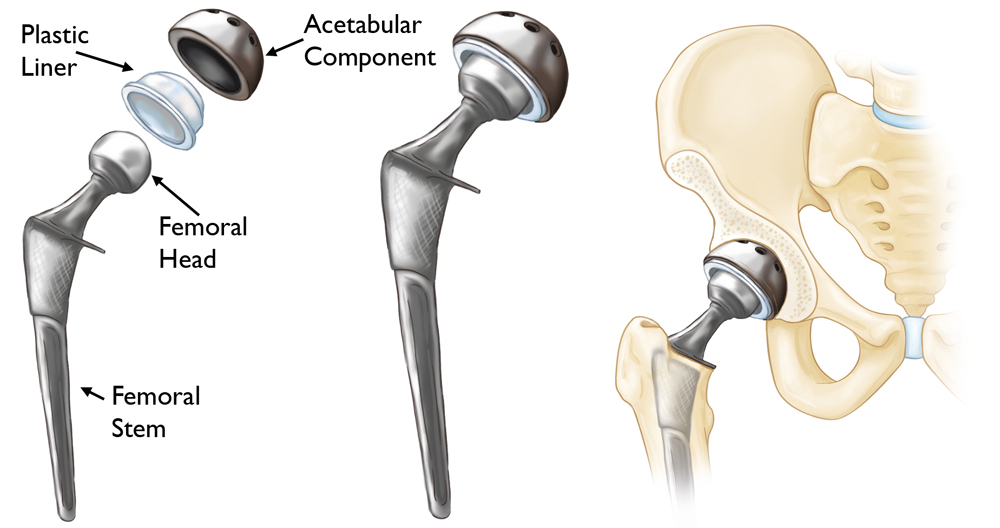
Hip replacement is a well-established procedure that can significantly improve mobility and reduce pain caused by severe hip joint disease. In some patients, however, an artificial hip may develop complications or wear over time and may eventually require further surgical treatment.
Revision Hip Replacement is a specialized procedure performed to address problems involving a previous hip replacement. Depending on the underlying problem, the surgery may involve replacing one or more components of the existing implant or removing and replacing the complete hip prosthesis.
Unlike primary hip replacement, revision surgery is often more technically demanding because the surrounding bone and soft tissues may have changed after the original surgery. Careful pre-operative assessment, appropriate implant selection and detailed surgical planning are therefore important parts of the treatment.
A previously implanted hip replacement may require revision for several reasons. The decision is based on the patient's symptoms, clinical examination, imaging findings and the condition of the implant and surrounding bone.
During a revision hip replacement, the surgeon carefully evaluates the existing prosthesis and the condition of the surrounding bone and soft tissues. Depending on the underlying problem, only a specific component may need to be revised, while in more complex cases the entire implant may require removal and replacement.
Revision procedures can involve specialized implants designed to provide stability in situations where the normal bone structure has been weakened or damaged. Additional techniques may also be required to restore bone support and achieve appropriate implant fixation.
Bone loss around a previous hip replacement can make revision surgery more complex. When sufficient bone is not available to support a standard implant, specialized components, metal augments or bone grafting techniques may be considered according to the individual surgical requirements.
The extent of reconstruction depends on the amount and location of bone loss, the stability of the existing implant and the condition of the surrounding tissues. Detailed imaging and surgical planning help determine the most appropriate approach.
Infection around an artificial hip is a serious complication that requires specialized assessment. Treatment depends on factors such as the duration of infection, the stability of the implant and the condition of the surrounding tissues. In selected cases, revision surgery may form an important part of the treatment plan along with appropriate infection management.
Recovery following revision hip replacement varies according to the complexity of the surgery, the condition of the bone and soft tissues, and whether additional reconstruction was required. Rehabilitation may include physiotherapy, gradual progression of mobility and exercises to improve strength and hip function.
Follow-up appointments and appropriate imaging are important to monitor healing, implant stability and functional recovery. The rehabilitation programme and weight-bearing recommendations are individualized according to the surgical procedure and the patient's progress.
Revision hip replacement requires careful evaluation and individualized surgical planning. A detailed assessment of the previous implant, bone quality, soft tissues and underlying cause of failure helps in selecting the appropriate surgical technique and implant for each patient.