
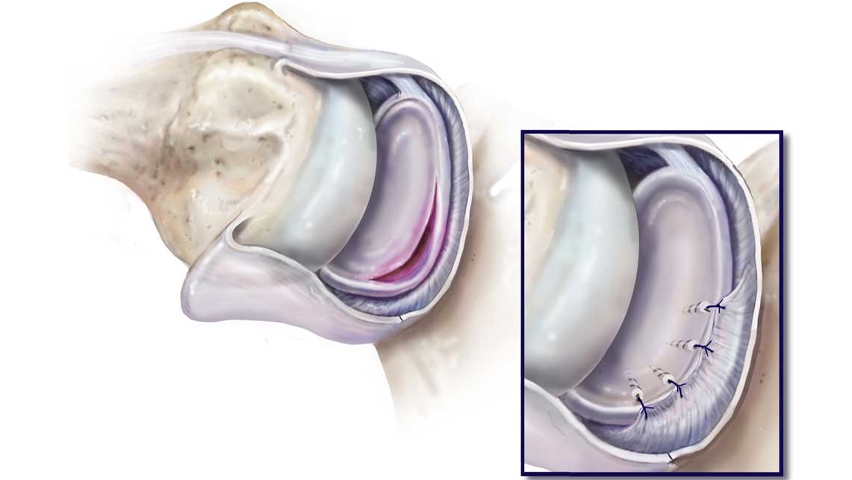
A Bankart lesion is an injury to the labrum, the specialized cartilage that surrounds the socket of the shoulder joint. It most commonly occurs following an anterior shoulder dislocation, when the labrum and supporting ligaments are detached from the front portion of the glenoid socket.
A damaged Bankart lesion can compromise the stability of the shoulder and may increase the risk of recurrent dislocations, particularly in younger and physically active individuals.
A SLAP lesion refers to an injury of the superior portion of the shoulder labrum, extending from the front (anterior) to the back (posterior) of the labrum. The injury may involve the attachment of the long head of the biceps tendon.
SLAP injuries may develop following a traumatic event or as a result of repetitive overhead movements. They are commonly seen in athletes and individuals involved in activities that place repeated stress on the shoulder.
Bankart and SLAP lesions can result from both acute injuries and repetitive shoulder stress. Common causes include shoulder dislocation, falls onto an outstretched arm, direct trauma, forceful pulling movements, and repetitive overhead activity.
Athletes involved in throwing, swimming, tennis, volleyball, handball, weight training, and other overhead sports may be at increased risk of developing labral injuries due to repetitive loading of the shoulder joint.
Symptoms can vary depending on the location and severity of the labral injury. Common symptoms may include:
Diagnosis begins with a detailed clinical assessment and examination of the shoulder. Depending on the symptoms and suspected injury, imaging investigations such as X-rays or magnetic resonance imaging (MRI) may be recommended to evaluate the labrum, ligaments, biceps attachment, and other structures of the shoulder joint.
Treatment is individualized according to the type and extent of the labral injury, the patient's age, activity level, shoulder stability, symptoms, and functional requirements. Depending on the condition, treatment may include activity modification, medication, physiotherapy, and structured shoulder rehabilitation.
When symptoms persist despite appropriate non-surgical treatment, or when significant instability or recurrent dislocation is present, surgical treatment may be considered.
Surgical stabilization may be recommended in selected patients when there is:
Bankart and selected SLAP repairs are commonly performed using minimally invasive arthroscopic techniques. During the procedure, a small camera called an arthroscope is inserted into the shoulder joint through a small incision, allowing the surgeon to carefully assess the labrum, cartilage, ligaments, and other joint structures.
The torn labrum is then prepared and repositioned against the glenoid rim. Specialized suture anchors may be used to secure the labrum and restore the stability of the shoulder. Any associated abnormalities identified during the procedure may also be addressed when clinically appropriate.
Arthroscopic Bankart and SLAP procedures are frequently performed as day-care surgeries. Depending on the patient's overall health, surgical requirements, and recovery after anesthesia, an overnight hospital stay may not be necessary.
Recovery following labral repair is a gradual process. The shoulder is usually protected with an immobilizer during the early healing phase, followed by a structured rehabilitation program.
Physiotherapy focuses progressively on restoring shoulder movement, strength, stability, and functional control. The timeline for returning to work, sports, and overhead activities depends on the type of repair, individual healing response, and rehabilitation progress.
Recurrent shoulder instability can gradually affect the supporting structures of the joint and may increase the risk of further injury. Appropriate evaluation and timely treatment can help restore shoulder stability, improve function, and support a safe return to daily activities and sports.